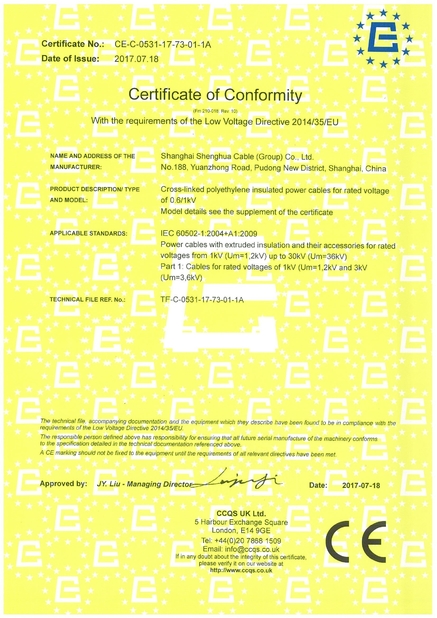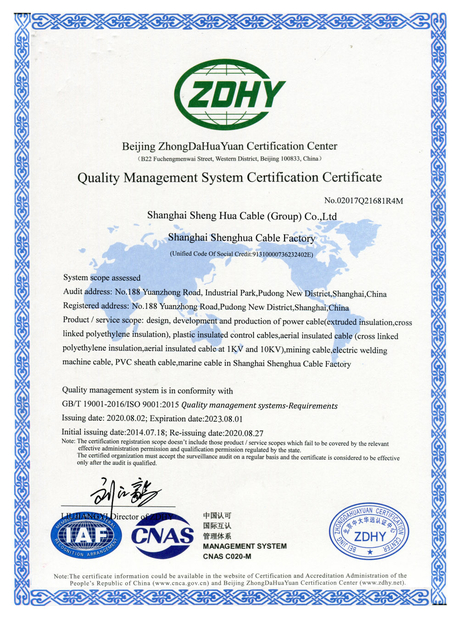
Câble de Changhaï Shenghua (groupe) Co., Ltd.

Le choix du bon câble est essentiel pour tout projet électrique. Les différences techniques entre les câbles basse tension (LV) et moyenne tension (MV) sont profondes,déterminant directement leurs applicationsLa compréhension de ces différences est essentielle pour assurer un système d'alimentation fiable, efficace et conforme.
Les câbles à basse tensionIls utilisent généralement une isolation en PVC ou en XLPE à une seule couche, sont souvent non blindés pour une utilisation en intérieur,et ont des sections transversales de conducteurs plus petitesCe qui les rend idéales pour le câblage interne dans les milieux résidentiels, commerciaux et industriels légers, allant des prises électriques et de l'éclairage aux systèmes de contrôle.
Les câbles à tension moyenneLa construction de ces appareils est plus complexe et plus robuste:
Installation de câbles LVDans les zones non dangereuses, ils peuvent être enterrés directement ou installés dans le conduit sans mesures spéciales excessives.et les techniques de jointure sont plus simples.
Installation de câbles MVest un procédé de précision avec des exigences strictes:
En résumé, considérez les câbles LV comme le "système de circulation" polyvalent pour la distribution d'électricité quotidienne, en donnant la priorité à la rentabilité et à la facilité d'utilisation.Les câbles MV sont les "artères" robustes du réseau électrique, où la conception et l'installation se concentrent sans compromis sur la fiabilité et les performances à long terme sous des contraintes plus élevées.
La sélection du bon type de câble et le respect de ses directives d'installation spécifiques ne sont pas seulement une question technique, mais une exigence fondamentale de sécurité et de réussite opérationnelle.Si vous prévoyez une mise à niveau des installations, un projet d'infrastructure ou une nouvelle construction, une compréhension claire de ces distinctions de classe de tension assure une installation électrique plus sûre, plus fiable et conforme.